

Booking a first cruise can feel like a lot of decisions at once: destination, ship, cabin, date, fare, flights, hotel, documents, and extras. The good news is that you do not need to solve every detail in one sitting. Start with the few choices that shape the whole vacation, compare the complete cost instead of a headline price, and make the reservation only after the important details line up.
1. Decide What You Want the Vacation to Feel Like
Before you look at deals, decide what would make the trip feel like a success. A couple hoping for quiet mornings, good dinners, and beach time should not begin with the same list as a family who wants shows, pools, flexible dining, and enough activity for every age. The destination matters, but so does the rhythm of the ship and the amount of time you want to spend in port versus at sea.
Start with a short list: who is traveling, how many nights you have, your comfortable total budget, the time of year you can go, and the experiences that matter most. You might care about a balcony, an accessible cabin, a shorter drive to the port, a particular destination, adults-only spaces, or a ship with plenty for children and teens. The point is not to create a perfect wish list. It is to separate the non-negotiables from the nice-to-haves before a low fare starts making choices for you.
If you are still deciding between types of sailing, the first-cruise comparison guide can help you weigh ship style, cabins, itinerary pace, and the kind of sea days you would actually enjoy. Once you know the shape of the trip, booking becomes much simpler.
2. Choose an Itinerary Before You Choose a Ship
It is easy to fall in love with a ship photo, then discover that the departure date, ports, or travel to the terminal do not work for your group. Begin with the itinerary and the full travel window. A five-to-seven-night sailing is often a comfortable first experience because it gives you time to learn the ship, enjoy more than one port, and still have a little room to slow down. A shorter sailing can work well when your calendar is tight, but it may have a faster, more social pace than you expect.
Look at the actual port times, not only the port names. An itinerary with a late arrival, an early departure, or a long transfer to the activity you want may not suit your travel style. Sea days matter, too. They are the clearest test of whether you like the ship itself. Imagine a full day onboard: would you rather have a large range of activities, a relaxed pool and dining routine, quiet spaces, or a ship that keeps everyone in your group occupied without forcing you to do the same thing?
Also factor in the trip to the port. A sailing from Florida may be convenient, but a same-day flight still leaves little room for disruptions. If you need to fly, a hotel the night before can be a practical way to protect the beginning of the vacation. Your cruise is the center of the trip, not the only reservation that matters.
3. Compare Specific Ships and Cabin Choices
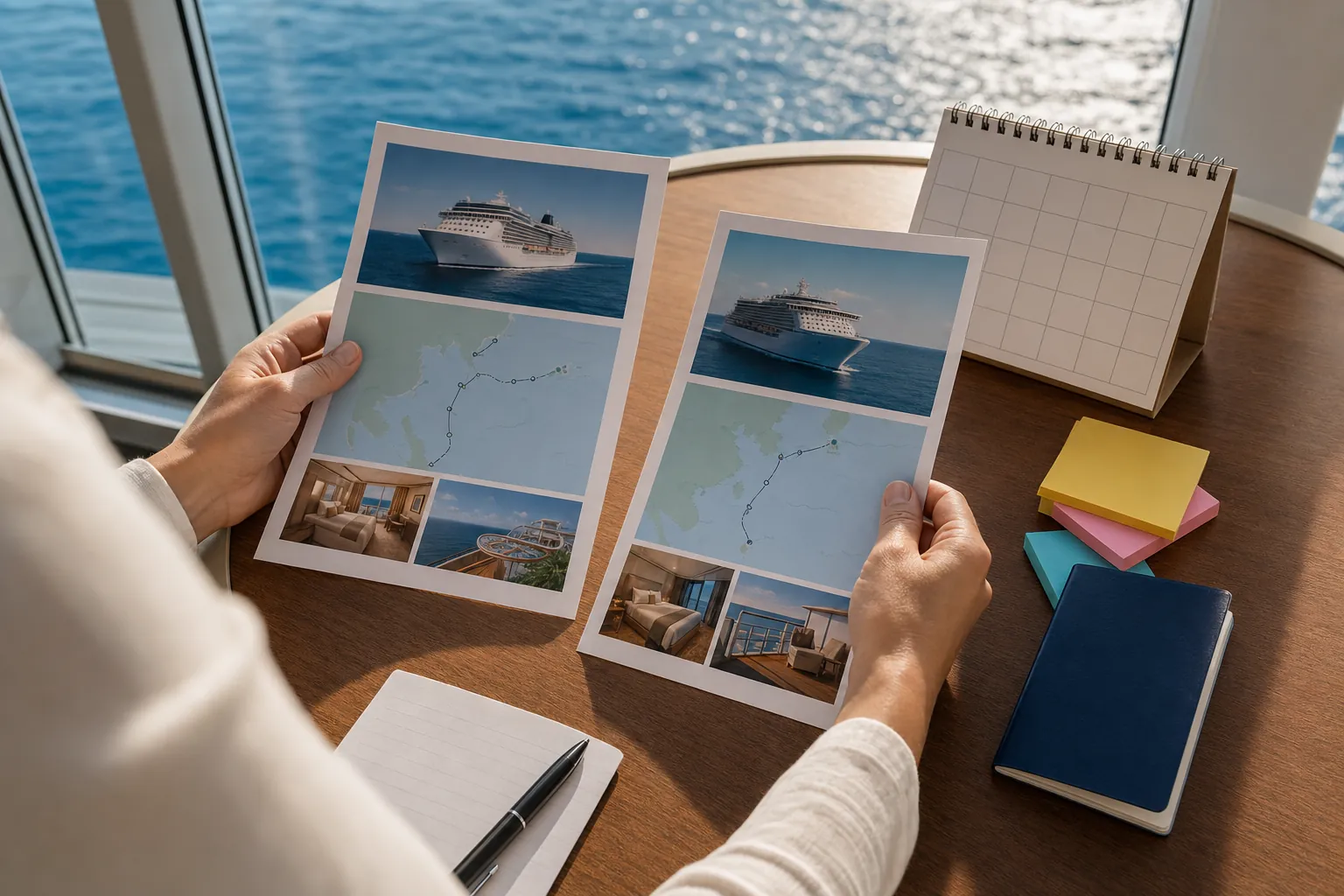
Once you have a few workable sailings, compare the specific ships, not only the cruise-line name. Ships within the same fleet can have different cabin layouts, dining options, adults-only areas, entertainment, accessibility features, and walking distances. Read the deck plan with your group in mind. A large ship can be excellent for variety, while a smaller ship can feel easier to navigate and less busy. Neither is automatically better.
Then choose a cabin for how you will really use it. An interior cabin can be a smart value when you plan to spend most of the day in public spaces or ashore. An ocean-view room adds natural light. A balcony can be worthwhile when private outdoor time, morning coffee, or a quieter place to end the day would genuinely improve the trip. Cabin location matters as much as category. Think about distance to elevators, whether anyone is a light sleeper, and what is above or below the room.
When two options look close, do not compare only square footage or the first fare number. Compare the room location, the itinerary, port travel, and the budget you will have left for the parts of the vacation you care about. A more modest cabin with a relaxed hotel night before sailing may suit you better than a premium room that leaves the rest of the trip feeling tight.
4. Add Up the Full Trip Cost
A cruise fare is a starting point, not the full cost of the vacation. Depending on the sailing and fare type, the cabin price may not include transportation to the port, a pre-cruise hotel, gratuities, Wi-Fi, drinks, specialty dining, excursions, travel protection, or spending in port. You do not need every add-on. You do need to know which ones matter to your group before the deposit makes the trip feel more fixed.
Create one simple total for each option. Begin with the cruise fare and required charges, then add transportation, hotel nights, and the experiences you are likely to use. A family may want a few excursions and Wi-Fi. A couple may prefer a balcony, a specialty dinner, and a quieter arrival day. Travelers who are happy with included dining and free activities may put more of the budget toward the cabin or the journey to the port.
Promotions are useful only when they match the way you will travel. A drink package is not automatically a saving, and onboard credit is most valuable when you already have a purpose for it. Signature Land & Sea Travel can compare current cruise promotions against the dates, cabin, and connected travel you need, so the offer supports your trip instead of distracting from it.
5. Check Documents Before You Pay a Deposit
Document rules depend on citizenship, itinerary, ports, and the cruise line. For many closed-loop cruises, which begin and end at the same U.S. port, U.S. citizens may be able to re-enter with proof of citizenship and government-issued photo identification. The current details are explained in U.S. Customs and Border Protection's Western Hemisphere Travel Initiative guidance. That exception does not make the same documents appropriate for every traveler or itinerary.
The U.S. State Department strongly recommends a passport book for cruise passengers, even when a cruise line does not require one, because an unexpected illness, missed ship, or other emergency may require a flight home from a foreign country. Check the cruise line's current requirements and the entry rules for each destination before booking. Names, birth dates, and travel documents should match the reservation exactly.
This is also the moment to consider the practical needs of everyone traveling. Confirm accessible-cabin requirements, dietary needs, medication plans, mobility support, or any independent tour limitations before you choose a fare. Solving a real constraint early is usually easier than trying to repair it after the best cabins have been taken.

6. Understand the Deposit, Final Payment, and Change Rules
Before confirming the booking, read the important dates and rules as carefully as you read the cabin description. Know the deposit amount, final-payment date, cancellation terms, name-change rules, and what happens if you need to move to a different sailing. Those details vary by cruise line and fare type. A lower price can carry stricter terms, while a more flexible option may be worth considering when your plans are not settled.
Travel protection deserves its own review rather than a quick yes-or-no at checkout. Coverage, exclusions, deadlines, and existing-condition rules are not identical across plans. Consider the total investment, who is traveling, the transportation around the sailing, and how much financial risk you are comfortable carrying. A qualified advisor or insurance provider can explain the details of a specific policy, but no policy should be chosen just because it appeared in the booking flow.
Keep a single record of the dates that matter: deposit, final payment, online check-in, excursion releases, dining reservations, and the point when changes become more limited. That small bit of organization makes the rest of the planning process feel much less complicated.
7. Make the Reservation With the Full Trip in View
When you are ready to book, confirm the sailing, cabin category and location, traveler names, dining preferences, payment schedule, and any connected hotel or transportation. Then save the confirmation where everyone involved can find it. Do not feel pressured to reserve every meal, excursion, and extra at the same time. Start with the items that are important to your trip or likely to have limited availability, then leave room to make the smaller decisions later.
Booking directly can be a good fit when you already know the exact sailing and details you want. Working with a travel advisor can be particularly helpful when you are comparing several ships, planning a group trip, need an accessible cabin, want flights and hotel nights coordinated with the cruise, or simply want someone to keep the choices connected. The Cruise Lines International Association explains that an experienced cruise travel advisor can help tailor a trip, which is why guidance can be valuable when the first cruise involves more than one reservation.
Signature Land & Sea Travel can coordinate the cruise with flights, hotels, rental cars, and vacation details, then help you compare the practical tradeoffs before the reservation is made. A personal cruise consultant keeps the focus on the trip you want, not just the first fare that catches your eye.
8. Use This First-Cruise Booking Checklist
Before you place the deposit, take one final pass through the essentials. The goal is not to make the booking process feel intimidating. It is to make sure the big decisions are working together before you commit.
- The sailing dates, port times, and sea days fit the kind of vacation you want.
- The specific ship has the spaces, activities, and pace that suit your group.
- The cabin category and location fit your sleep, space, and mobility needs.
- The budget includes the port travel, hotel night, required charges, and extras you expect to use.
- Every traveler has the required documents for the itinerary and cruise line.
- You understand the deposit, final-payment date, cancellation terms, and change rules.
- Your confirmation details match every traveler's legal documents.
After the booking is complete, the next useful step is preparation. The first-time cruise tips guide covers what to do between the reservation and embarkation day, including check-in, packing, spending choices, port days, and the trip home.
Frequently Asked Questions
How far ahead should I book my first cruise?
There is no single perfect booking date, but booking earlier usually gives you more sailing dates, cabin locations, and connected travel choices. That matters most for holidays, school breaks, accessible cabins, family groups, or a specific room type. A later booking can work when your dates and cabin needs are flexible.
What information do I need to book a cruise?
Have each traveler's legal name, date of birth, citizenship, and current travel-document details ready. You will also want a realistic budget, preferred dates, a sense of the cabin and itinerary you want, and a payment method for the deposit. Check the cruise line's exact requirements before confirming anything.
Is it better to book a cruise directly or use a travel advisor?
The best option is the one that gives you clear information and the right support for your trip. Booking directly can suit travelers who already know the exact ship, sailing, cabin, and add-ons they want. A travel advisor can be especially useful when you are comparing options, coordinating flights or hotels, traveling with a group, or want one person to help keep the full trip aligned.
What is usually included in a cruise fare?
The fare commonly includes the cabin, many meals, and a range of onboard entertainment, but inclusions differ by cruise line and fare type. Transportation to the port, gratuities, Wi-Fi, drinks, specialty dining, excursions, travel protection, and a hotel before the sailing may be extra. Compare the full trip, not only the first number you see.
Related Posts

First Cruise
Best Cruises for First-Time Cruisers: How to Choose Your First Cruise
Find the best first cruise for your travel style, with practical guidance on itineraries, ships, cabins, pacing, and trip costs.
Read the Guide
First Cruise
First Time Cruise Tips: What to Expect Before You Sail
What to expect on your first cruise, from documents and embarkation day to packing, spending, port days, and getting home.
Read the Tips