

A first cruise has a few moving parts that are easy to miss: documents, arrival time, luggage, onboard accounts, port days, and the trip home. None of them needs to be difficult. Handle the right decisions before departure, keep the first day flexible, and you can spend far less time figuring things out once you are onboard.
What to Expect on Your First Cruise
Your first cruise will likely feel most unfamiliar before you board. You will check in at the terminal, complete a safety briefing, wait for your cabin to be ready, and learn the ship's layout. After that, the rhythm becomes straightforward: meals, shows, pool time, port days, and the daily schedule are all there to help you choose the pace that suits you.
Most first-time concerns come down to a few practical decisions. Bring the right documents, keep essentials in your carry-on, arrive with enough time, and decide which reservations or extras matter to your group. You do not need a plan for every hour. A little preparation leaves room to enjoy the ship instead of trying to master it on day one.
A Simple First-Cruise Timeline
Before you leave home, complete online check-in, confirm documents, save your boarding details, and keep the items you need immediately in a carry-on. On embarkation day, follow your arrival time, check larger bags if you are using them, have lunch, and get familiar with the ship while you wait for your cabin. The required safety briefing, cabin access, and sail-away are the main milestones, so there is no need to schedule the first afternoon too tightly.
Once the ship is underway, use the daily schedule to choose a few things you care about, rather than trying to do everything. On port days, leave enough time to return before the all-aboard time. On the last evening, review your onboard account and set aside the documents, medication, and clothes you will need for disembarkation. Knowing this basic rhythm makes a first cruise feel far more familiar before it starts.
1. Start With the Whole Trip, Not Just the Sailing
Your cruise begins when you leave home, not when you step onto the ship. Look at the transportation to the port, the arrival window, the boarding day, and the flight or drive home as one itinerary. This is especially important when you are flying. A fare that looks attractive can become stressful if it depends on a tight same-day connection or an early return flight after disembarkation.
If the port is a long drive away or you are flying in, compare the cost of arriving a day early with the peace of mind it creates. A nearby hotel, a good dinner, and a calm morning can be a better start than watching a delayed-flight notification at the airport. Travelers who live close enough to drive may still want a little time cushion around traffic, parking, and the terminal process.
Before you make reservations, agree on the few things that genuinely matter to your group. That may be a balcony, an accessible cabin, a certain port, a family-friendly ship, a quiet room location, or a simple budget. The detailed comparison in our guide to choosing a first cruise can help you narrow the ship and itinerary before the smaller decisions begin.
2. Confirm Documents Before You Get Attached to a Sailing
Document rules depend on citizenship, itinerary, ports, and cruise line. U.S. citizens on many closed-loop cruises, which begin and end at the same U.S. port, may be able to re-enter with proof of citizenship and government-issued photo identification. That exception does not make a passport unnecessary for every traveler or every itinerary. U.S. Customs and Border Protection explains the current closed-loop rules in its Western Hemisphere Travel Initiative guidance.
A passport book is still the more flexible choice for international travel and unexpected changes. The U.S. State Department strongly recommends a passport book for cruise travelers because an emergency can require a flight home from a foreign country. Check the cruise line's rules and every destination's entry requirements before paying a deposit, then check them again closer to departure. Names, expiration dates, and citizenship documents should match the booking exactly.
Do not leave this task for the week before you sail. It is much easier to change a cabin, select a different itinerary, or renew a document while you still have choices. Keep digital copies for reference, but travel with the original documents the cruise line and authorities require.
3. Complete Check-In Early and Respect Your Arrival Time
Once online check-in opens, complete it for everyone in your party. You will usually provide identification details, select or confirm an arrival time, and set up the account used for onboard spending. The exact steps vary by line, but early check-in usually gives you a cleaner start to boarding day and keeps you from handling every detail at the terminal.
Follow the arrival time you are assigned. It keeps the terminal from becoming an unnecessary bottleneck, and it gives your group a realistic target for leaving the hotel, parking, or drop-off point. Have boarding documents, identification, and any needed medical or travel information easy to reach instead of buried in a large suitcase.
Before leaving home, read the specific ship's packing and prohibited-item rules. Beverage policies, power-strip rules, luggage dimensions, and dining dress expectations can differ. A first cruise feels much easier when you avoid arriving with something that needs to be discarded or sent back to the car.
4. Pack a Carry-On for the First Several Hours
Checked bags may not arrive at your stateroom immediately. Pack a small carry-on that lets you enjoy the ship without waiting: documents, medication, valuables, a phone charger, sunglasses, sunscreen, a swimsuit, and a change of clothes are sensible starting points. Keep any item you would be genuinely upset to lose or need quickly out of checked luggage.
A carry-on also saves you from wandering the ship with everything you own. Check larger bags with the terminal porter when that is the right fit for you, then take only what you need while cabins are being prepared. Royal Caribbean's first-time cruise guidance makes the same practical point: keep immediate essentials with you and use the first hours to get oriented.
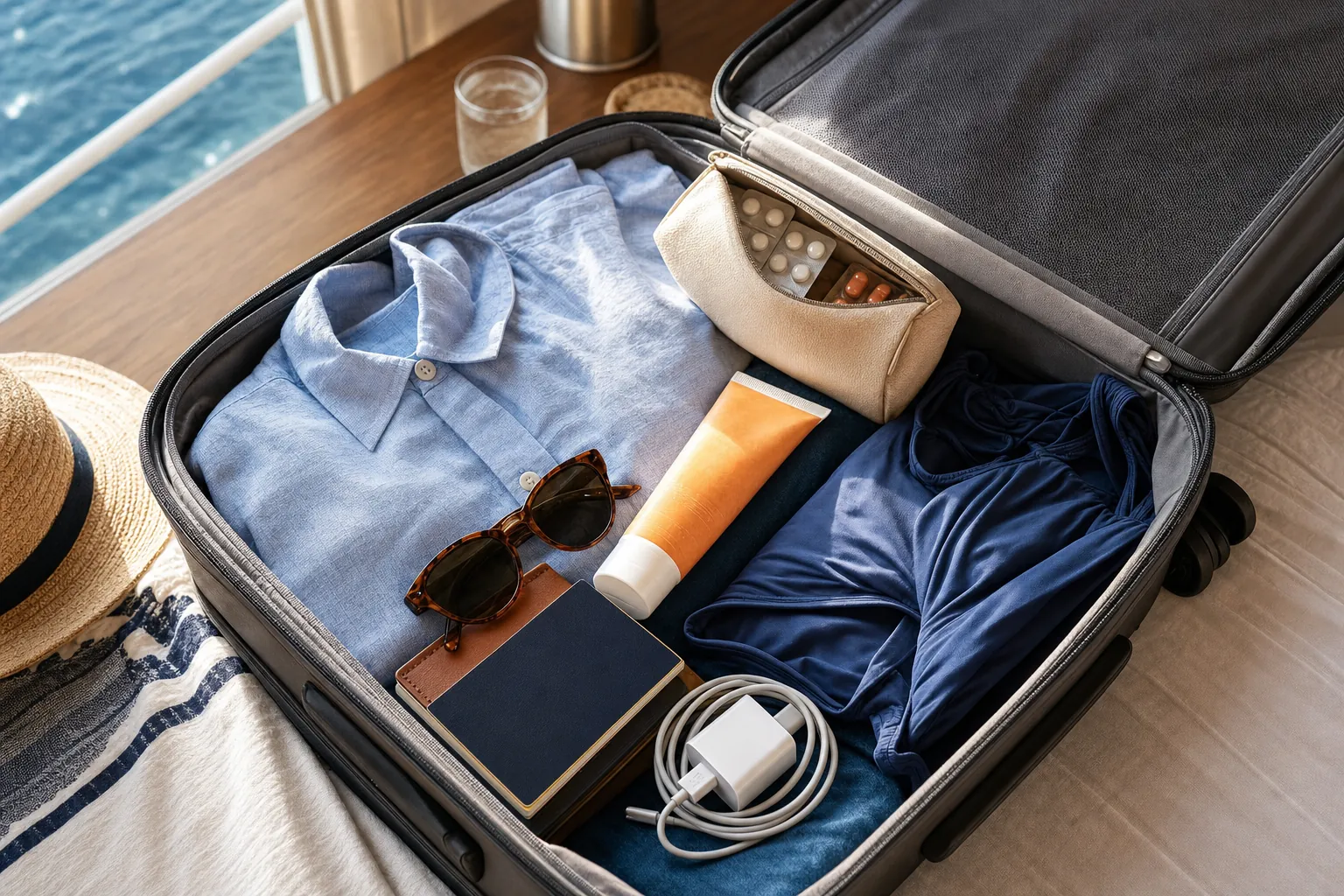
Pack for the days you will actually have. A cruise ship's indoor spaces can feel cool, ports can be hot and wet, and walking surfaces can be slippery. Comfortable shoes, one light layer, and a small day bag are more useful than a suitcase full of items you will never wear. If you use a mobility device or have a health need, confirm the cabin and shore-day logistics before packing around assumptions.
5. Make Embarkation Day Intentionally Easy
Do not try to do every ship activity in the first hour. Board, have lunch, explore a few main spaces, and notice where the places you will use most often are located: your cabin area, dining rooms, pool deck, guest services, theater, elevators, and a quiet place to sit. A quick walk around the ship makes the next few days feel far less overwhelming.
Once your cabin is ready, take a few minutes to settle in. Put documents and valuables somewhere deliberate, review the daily schedule, and check the location and time for the required safety briefing. That briefing is part of the trip, not a nuisance to rush through. Knowing your muster station and what to do in an emergency makes the ship easier to enjoy.
Pick only one or two priorities for the afternoon. You might reserve a specialty dinner, sign up for an excursion, confirm a spa appointment, or simply find a good spot for sail-away. The goal is to begin with a little breathing room. The ship will be there tomorrow, and a calmer first day helps you learn its rhythm.

6. Decide Which Extras Matter Before You Start Spending
A cruise is not necessarily an all-inclusive vacation. The fare can cover your cabin, many meals, and plenty of entertainment, while other costs may include gratuities, transportation to the port, a pre-cruise hotel, beverages, Wi-Fi, specialty dining, excursions, travel protection, and shopping ashore. The useful question is not "What is included?" in the abstract. It is "Which of these extras will make this trip better for us?"
Set a comfortable total budget before you board, then give each category a purpose. A family may value Wi-Fi and a few planned excursions. A couple may care more about a balcony, specialty dinner, or a hotel night before sailing. Travelers who want a mostly low-key vacation may decide the included dining and free activities are enough. A package is valuable only when it matches how you will actually travel.
Watch the timing of promotions and booking windows, but do not let a headline offer choose the vacation for you. Signature can compare current cruise promotions against the cabin, dates, and connected travel you actually need. That keeps the decision focused on the full trip rather than one appealing line on a fare screen.
7. Give Port Days Some Margin
Decide what kind of day you want in each port before you look at every available excursion. A beach day, food-and-culture walk, active outing, museum visit, or a few quiet hours ashore can all be good choices. Trying to fit everything into every stop is a reliable way to turn a vacation into a schedule.
If you book an independent tour, be conservative about timing. Confirm the meeting point, travel time, cancellation terms, accessibility, and how much margin you have before the ship's all-aboard time. Ship-sponsored experiences can be a comfortable option for travelers who value a coordinated meeting place and return schedule. Independent tours may offer a different pace or price. Neither is automatically right for everyone.
Health preparation belongs in the plan, too. The CDC's current cruise ship travel guidance recommends frequent handwashing or hand sanitizer use and advises travelers to check with their cruise line for current requirements. Travelers with health concerns should speak with a qualified medical professional and consider what medical or evacuation coverage makes sense for their trip.
8. Let the Daily Schedule Guide You, Not Control You
Every evening, take five minutes to look at the next day's schedule. Note the dining time, port arrival or departure, required meeting times, show reservations, and one or two activities you would be disappointed to miss. That is enough planning for most people. You do not need to turn every sea day into a color-coded agenda to get good value from the ship.
Choose a few anchor points, then leave space between them. A leisurely breakfast, one planned activity, a port excursion, and dinner may be a full day already. The in-between moments are often the ones travelers remember: sitting near a window, listening to live music, reading by the pool, or walking the outer deck as the ship leaves port.
It also helps to check your onboard account before the last evening. Review any charges while the details are still familiar, ask questions early if something does not look right, and make sure gratuities, packages, and excursion costs match what you expected. A quick review is calmer than trying to sort through a bill while everyone is lining up to leave the ship.
9. Plan the Last Morning Before You Unpack
Disembarkation is easier when you decide early whether you want to carry your own luggage off the ship or place tagged bags outside the cabin the last night. Either way, keep passports, medication, valuables, travel documents, and clothes for the final morning with you. Check the ship's instructions for your departure group and leave enough time for customs, parking, airport transfers, or the drive home.
Do not book the earliest flight simply because the ship arrives early. Ships still need to clear, guests disembark in groups, and travel days have their own surprises. A little room in the schedule protects the relaxed feeling you worked to create at the beginning of the trip.
How Signature Land & Sea Travel Helps
Signature Land & Sea Travel can help turn these separate details into one cruise plan. That includes comparing ships and cabins, coordinating flights, hotels, rental cars, and port timing, and reviewing offers that suit the trip rather than adding clutter to it.
If you are planning a first sailing, a personal cruise consultant can help you compare options with the people, pace, budget, and practical travel details in view. When you are ready, you can request a travel quote built around the kind of vacation you want to have.
Frequently Asked Questions
What should I do first after booking my first cruise?
Confirm each traveler's documents, save the final-payment and check-in dates, and make a simple plan for getting to the port. Then decide which cabin, dining, excursion, or accessibility details matter enough to reserve early. You do not need to schedule every hour before you sail.
What should I expect on my first cruise?
Expect a few key moments to feel new at first: terminal check-in, a safety briefing, finding your way around the ship, and deciding which extras matter to you. Once you have your documents, carry-on essentials, arrival plan, and first-day priorities in place, the experience usually becomes much easier to enjoy.
What happens on embarkation day for a first cruise?
You will arrive during your assigned check-in window, show your travel documents, go through the terminal process, and board the ship. Cabins and checked bags may not be ready right away, so keep essentials with you, have lunch, explore a few main areas, and attend the required safety briefing before settling into the rest of the afternoon.
What should I keep in my carry-on bag on embarkation day?
Keep documents, medication, valuables, a phone charger, sunscreen, a swimsuit, and a change of clothes with you. Checked bags may arrive at your stateroom later, so the carry-on should cover the first several hours of the trip without needing anything from your larger luggage.
How much spending money should I plan for on a cruise?
Start with the fare and required taxes or gratuities, then decide which extras matter to your trip: transportation to the port, a hotel night, dining upgrades, drinks, Wi-Fi, excursions, travel protection, and purchases ashore. The right amount depends on what you want included in the experience, not a universal daily number.
Should I arrive in the port city the day before my cruise?
Arriving the day before is often the less stressful choice when you are flying, have a tight connection, or are sailing from a port far from home. It adds a hotel night, but it also gives you room for delays and lets embarkation morning begin at a more comfortable pace.
Related Posts

First Cruise
Best Cruises for First-Time Cruisers: How to Choose Your First Cruise
Find the best first cruise for your travel style, with practical guidance on itineraries, ships, cabins, pacing, and trip costs.
Read the Guide