
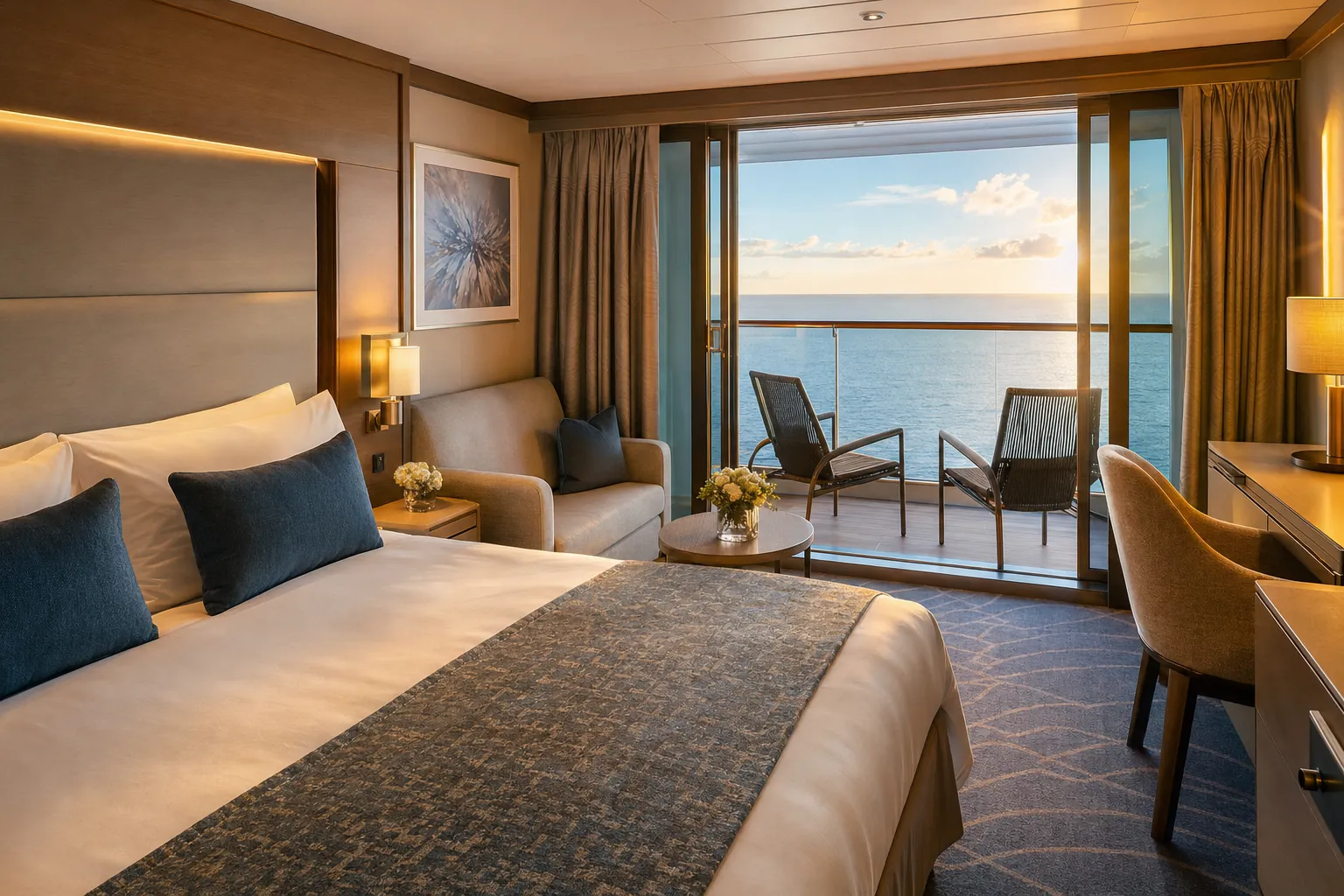
A cruise cabin is more than somewhere to sleep. It is where you start a port day, reset after a busy afternoon, keep the things that make travel comfortable, and sometimes watch the world go by. The right one is not automatically the largest or most expensive room. It is the room whose light, space, location, and price fit the way you plan to spend the trip.
The Quick Comparison
- Choose an inside cabin when the lowest fare matters most and you expect to be out enjoying the ship and destinations.
- Choose an ocean-view cabin when daylight and a connection to the sea matter, but a private outdoor space is not essential.
- Choose a balcony cabin when you will genuinely use quiet outdoor time and the scenery is part of why you chose the sailing.
- Choose a suite when extra space, a particular layout, or the benefits attached to that suite category will improve this trip enough to justify the difference.
Cruise lines use different names, but the usual starting point is inside, ocean view, balcony, and suite. The industry guide from Cruise Lines International Association also stresses that ships may offer many stateroom variations within those broad groups. That is the important part. A category name gets you started, but the exact ship's deck plan and room description decide what you are actually buying.
Start With How You Want to Use the Room
Before comparing pictures, think about your normal day on this sailing. Are you taking a scenic route where you would love coffee outside before breakfast? Is the trip full of long port days, with the cabin mostly serving as a quiet place to shower and sleep? Are you traveling with a partner, children, or friends who need more room to get ready at once? The answer changes which upgrade brings real value.
A cabin is often a better place to spend money when it solves a repeat problem. A balcony can give two travelers a separate place to sit when one wants a nap. A room closer to the elevator can save steps for someone with mobility concerns. A larger cabin can make a family setup feel less like a daily puzzle. In contrast, a headline upgrade is easy to overvalue if you will only use it once or twice.
Use the first-time cruise planning guide to settle the route, ship, and travel days first. Cabin choice becomes clearer when you know whether the vacation is about glacier views, sunny sea days, full-day excursions, or a little of everything.
Inside Cabins: Best When the Fare Buys More of the Trip
An inside cabin has no exterior window or private balcony. It is often the least expensive way to get onto a particular ship or itinerary, which can leave more room for the flights, hotel night, excursions, specialty experiences, or travel insurance that shape the whole vacation. It can also be a smart choice for travelers who sleep best in a dark room and expect to spend little waking time there.
The tradeoff is simple: there is no natural light and no immediate view of the destination. That matters more to some travelers than others. If you enjoy a slow morning in your room, are uneasy in a windowless space, or are sailing somewhere where the scenery is a major part of each day, compare the savings against the experience you are giving up. A low fare is useful only if the room still lets you relax.
Inside does not mean identical. Some cabins have a better bed arrangement, extra bunks, a sofa, or a location that makes a difference. Read the room description, not just the category label, and look at the deck plan for what is above, below, and beside it.
Ocean-View Cabins: A Middle Ground for Daylight
An ocean-view cabin usually has a window or porthole, giving you daylight and a view without the price of a balcony. It can be an excellent compromise for a first cruise. You get a sense of the weather and the sea when you wake up, but you are not paying for an outdoor space you may not use.
Check the specific wording carefully. One ship's ocean view may be a large picture window, while another may be a porthole, an obstructed view, or a window facing an interior promenade rather than open water. The room may be on a lower deck where tender equipment, lifeboats, or railings affect the view. None of that is automatically a bad choice, but it needs to be clear before you book.

For travelers who want to keep the budget sensible while still feeling connected to the destination, this category often deserves a close look. Compare the price difference against an inside cabin and ask what you would do with the savings. If the difference funds a pre-cruise hotel near the port or the shore experience you care about most, the inside cabin may still win. If natural light will change how you feel every day, the ocean view can be the better use of the budget.
Balcony Cabins: Pay for the Private Time You Will Use
A balcony cabin adds a private outdoor area, usually with chairs and a small table. It can turn ordinary parts of the day into part of the vacation: coffee before the ship wakes up, a quiet break while a child naps, a view after dinner, or a place to take in a scenic sail-away without finding a public deck. For a couple who values downtime, that privacy can be meaningful.
The question is not whether a balcony is nice. It is whether it is worth the difference on your sailing. A balcony often earns more value on routes with long scenic stretches, sea days, or a pace that lets you linger. It may earn less on a cruise with early starts, full-day independent exploring, and evenings spent in the ship's restaurants, shows, and lounges.
Look beyond the word balcony. Forward, aft, and side-facing rooms can have different wind, views, noise, shade, and balcony sizes. A balcony under a busy public deck may have more footsteps overhead. One near an exterior smoking area may be less appealing to a non-smoker. Study the plan and compare room photos where the cruise line offers them. It is better to know about a tradeoff now than after boarding.
Suites: Consider the Space and the Benefits Separately
Suites may offer more square footage, a separate sitting area, a larger bathroom, a better balcony, or priority services and exclusive spaces. They can make a major difference for a multigenerational trip, a celebration, a long sailing, or travelers who expect to use the cabin as a retreat. They are not one uniform product, however. A junior suite and a top-tier suite can feel like completely different vacations.
First, compare the physical room. Can everyone sleep comfortably? Is there a true separate area, or simply more floor space? Then compare the benefits. Some suite levels include dining access, concierge help, priority boarding, a lounge, or a private deck. Others are mainly a larger room. If the benefits are important, confirm they apply to your exact suite class and sailing, not merely to a higher suite category shown on the same ship.
The first-cruise budget guide can help keep this decision in proportion. A suite may be exactly right when it improves the trip every day. It is less compelling when it forces you to cut the travel days, excursions, or cabin location that would make the vacation feel complete.

The Deck Plan Can Matter as Much as the Cabin Type
Once you have narrowed the category, open the exact deck plan. A room beside an elevator lobby, below a buffet, above a theater, or near a crew work area may feel very different from a room in the same category on a quieter part of the ship. The plan also shows whether you are far from the places you expect to use most, such as the pool, dining rooms, children's spaces, or medical center.
Travelers concerned about motion often start by looking midship, where the ship's movement can feel more moderate than at the very front or back. The same CLIA guide notes that a midship cabin can be less affected by movement for passengers prone to seasickness. That is a helpful starting point, not a guarantee. Weather, itinerary, deck height, and your own sensitivity all matter.
Also check what is directly above and below the cabin, not just nearby. Cabins surrounded by other cabins are often quieter than those near a late-night venue, gym, pool deck, or service area. If you are choosing a guarantee category, decide in advance whether you would be comfortable with any of the possible locations. If the answer is no, choosing a cabin number is usually worth considering.
Match the Cabin to the People Sharing It
For couples, the decision may center on privacy, daylight, and whether the balcony becomes a useful second place to sit. For families, bed configuration matters just as much as square footage. A room that technically sleeps four may rely on pull-down bunks or a sofa bed, which can work well for children but change the room during the day. Connecting cabins can offer both proximity and breathing room, but availability is limited, so it is worth considering early.
For friends traveling together, ask who needs which bed, how everyone handles bathroom time, and whether anyone is a light sleeper. A slightly larger room or a layout with a curtain can be more valuable than a view. For solo travelers, compare the solo category, single supplement, location, and any shared-space benefits. The best answer is often the cabin that keeps the group relaxed, not the cabin that makes the most impressive booking screenshot.
Use the Exact Ship, Sailing, and Fare Rules
Do not assume that a category on one ship matches the same name on another. Cruise lines update ships, add new layouts, and use category codes that can be confusing. The guide to choosing a cruise line is a useful companion because the ship's personality and itinerary shape how much a room feature will matter.
Before paying a deposit, confirm the room number or guarantee terms, view description, bed setup, accessibility needs, deposit and cancellation rules, and every fare inclusion. Save the confirmation once it is correct. The first-time cruise tips can help with the next planning steps, from documents and boarding timing to packing for the days you have chosen.
Choose the Cabin as Part of the Whole Vacation
There is no universally best cruise cabin. The right one is the room that supports your itinerary, the people you are traveling with, and the budget you want to protect. An inside cabin can be a confident, deliberate choice. An ocean view can make every morning feel more open. A balcony can be a genuine refuge. A suite can make the right trip feel effortless. What matters is choosing it on purpose.
Signature Land & Sea Travel can help you compare the room, ship, itinerary, travel to the port, hotel timing, and overall trip cost together. That makes it easier to see when a cabin upgrade adds daily value, and when the same budget would work harder somewhere else in the vacation.
Frequently Asked Questions
What are the main types of cruise cabins?
Most ocean cruises organize staterooms into inside, ocean-view, balcony, and suite categories. Individual ships then add their own variations, so compare the exact room size, layout, bed arrangement, view, and location before you book.
Is a balcony cabin worth it on a cruise?
A balcony can be worthwhile when private outdoor time, daylight, and a quiet place to enjoy the scenery are central to the trip. It may be less important on a port-heavy itinerary when you expect to spend most of each day ashore or in the ship's public spaces.
Which cabin is best if I worry about motion?
Many travelers prefer a midship cabin on a lower or middle deck because it can feel steadier than a cabin far forward, aft, or high on the ship. Motion is never fully predictable, so use the exact ship's deck plan and talk through the itinerary, too.
Should I choose a guaranteed cabin or pick a cabin number?
A guaranteed category can save money when you are comfortable letting the cruise line assign the exact cabin. Choose a specific cabin when location, connecting rooms, accessibility, bed setup, view, or distance from a busy venue matters to you.
Related Posts

First Cruise
How to Plan a Cruise: 8 Steps for First-Time Cruisers
Plan your first cruise in 8 steps: compare itineraries, ships, cabins, total costs, documents, and travel to the port before you book.
Read the Guide
First Cruise
How Much Does a Cruise Cost? A First-Time Budget Guide
Estimate what a first cruise really costs by comparing the fare, travel to the port, required charges, and the extras you want.
Read the Guide
First Cruise
How to Choose a Cruise Line That Fits Your Trip
Learn how to choose a cruise line by comparing the itinerary, ship, cabin, pace, and real trip cost before you book.
Read the Guide
First Cruise
First Time Cruise Tips: What to Expect Before You Sail
What to expect on your first cruise, from documents and embarkation day to packing, spending, port days, and getting home.
Read the Guide